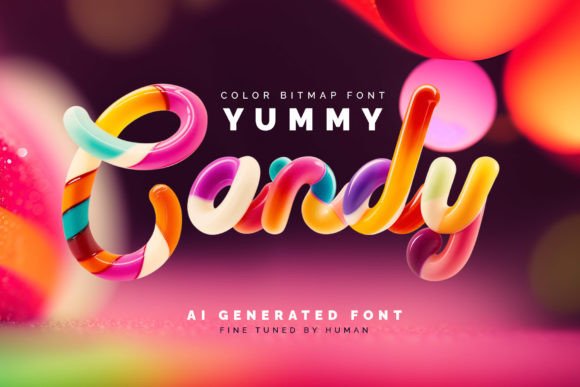
Yummy Candy: A Sweet Treat for Modern Design Projects
A New Era of Typography
There is a distinct shift happening in digital typography. We are moving beyond the flat, single-color vectors that have dominated design for decades into a realm of rich, textured, and multi-dimensional lettering. Leading this charge is the Yummy Candy color font. This isn't just another script font or display typeface; it is a visual statement piece engineered to grab attention instantly. Built using generative AI technology, Yummy Candy represents the cutting edge of modern typography, offering a tactile, vibrant aesthetic that was previously impossible to achieve without complex illustration work.
At its core, Yummy Candy is a color bitmap OpenType-SVG font. While it functions just like a standard OTF file, the technology behind it allows for a level of detail that traditional vector fonts cannot match. The designers have utilized generative AI to create a glossy, three-dimensional appearance that mimics the look of real confectionery. The result is a typeface that feels alive, with highlights, shadows, and a gooey texture that pops off the screen. If you are looking to elevate your brand identity or add a layer of whimsy to your packaging design, this asset is built specifically for that purpose.
Visual Characteristics and Technical Specifications
Understanding the anatomy of this font is key to using it effectively. The Yummy Candy typeface features rounded, soft letterforms that exude friendliness and approachability. It avoids the sharp edges found in geometric sans serif fonts, opting instead for a playful, organic flow. The color palette is vibrant, typically featuring high-saturation hues that simulate the look of hard candies or frosting. This makes it an excellent choice for projects targeting younger audiences or anyone with a sweet tooth.
From a technical standpoint, the resolution is impressive. The capital letters in the OTF file are roughly 600 pixels in height, making them incredibly sharp on high-definition displays. However, the creators have gone a step further. The package includes PNG files with transparent backgrounds featuring characters that are approximately 3500 pixels in height. This is a massive advantage for editorial design and large-format printing. Whether you are designing a billboard, a poster, or a hero image for a website, the image quality remains pristine without pixelation.
It is important to note the language support. Currently, Yummy Candy supports the English language and basic punctuation. I recommend checking the screenshot of existing characters to ensure it meets your specific text requirements. Additionally, the package includes fancy blurred background images. These assets are not just fillers; they are designed to complement the glossy nature of the font, helping you create a cohesive atmosphere for your social media graphics or web headers immediately.
Practical Applications for Creatives and Brands
The versatility of Yummy Candy extends across various creative industries. For logo design, particularly in the food and beverage sector, this font serves as a powerful anchor. Imagine a bakery, a smoothie bar, or a children’s party planning service using this typeface. It immediately communicates the nature of the business without needing a lengthy explanation. It sets a mood of fun, indulgence, and creativity.
For content creators and marketers, the font is a secret weapon for engagement. In the fast-paced world of social media, stopping the scroll is the primary objective. The 3D, candy-like texture of Yummy Candy creates a visual hook that flat text simply cannot match. It works exceptionally well for:
- Instagram Stories and Reels: Use the included PNG files to overlay text on video content. The high resolution ensures the text remains crisp even when scaled.
- YouTube Thumbnails: The bold, colorful nature of the font ensures readability even at small sizes on mobile devices.
- Web Design: While body text should remain legible (usually a serif font or clean sans serif), Yummy Candy is perfect for hero sections, call-to-action buttons, or seasonal sale banners.
Entrepreneurs and small business owners will find this font particularly useful for packaging design. In a crowded marketplace, shelf appeal is everything. A product label featuring Yummy Candy stands out against competitors using standard typography. It suggests a premium, artisanal quality—specifically one that values creativity and fun. Crafters and hobbyists can also leverage these design assets for scrapbooking, digital planning, or creating custom merchandise like t-shirts and mugs.
Technical Considerations and Software Compatibility
While the technology behind Yummy Candy is revolutionary, it is a relatively new frontier in modern typography. Color fonts operate differently than standard vector fonts, and not all software handles them the same way. However, the good news is that the industry standard applications fully support this format.
If you are using Adobe Photoshop, Illustrator, or InDesign, you can use Yummy Candy just as you would any other font. Simply install the OTF file, select it from your font menu, and type. The color and texture will appear automatically. This seamless integration makes it accessible even for designers who are new to color bitmap technology. Similarly, users of Procreate on the iPad and Affinity Designer will find full compatibility.
However, there are limitations to keep in mind. Because Yummy Candy is a bitmap font (essentially a high-resolution image wrapped in a font file), you cannot change the color of the text via the standard color picker in your design software. The colors are baked into the glyphs. If you need to change the color palette, you would need to use the provided PNG files and apply color overlays or clipping masks, which requires a bit more manual work. This is a standard limitation of color fonts, but it is worth noting if your brand identity requires a very specific, non-standard color scheme.
Integrating Yummy Candy into Your Workflow
Successful design is often about contrast and hierarchy. Because Yummy Candy is a premium font with a very distinct personality, it requires careful font pairing. It is a display font at heart, meaning it is designed for headlines and short bursts of text, not for long paragraphs.
When creating visual hierarchy, pair Yummy Candy with a neutral, highly legible typeface. A clean geometric sans serif font works beautifully to balance the whimsy of the candy text. For example, using a bold weight of a font like Montserrat or Open Sans for your subheadings allows the main headline in Yummy Candy to shine without overwhelming the viewer. Conversely, pairing it with a classic serif font can create an interesting juxtaposition between playful and elegant, though this requires a more experienced eye to execute well.
Before finalizing a project, always test the font at the actual size it will be viewed. While the 600px resolution is high, the texture details can get lost if the text is reduced too small. It is best used for "loud" communication—titles, headers, and logos. For body copy, always revert to a standard web design font that prioritizes readability over flair.
Finally, regarding commercial licensing: always ensure you have the correct license for your intended use. Most creative fonts like this allow for a wide range of commercial use, but if you are planning a massive distribution campaign or embedding the font in software, double-check the terms. Yummy Candy is more than just a typeface; it is a high-quality design asset that, when used thoughtfully, can transform a standard project into something memorable and engaging. It brings a tactile, sensory quality to digital design that resonates with audiences looking for a bit of joy in their visual consumption.